Search

the Korean Tutor

Professional Korean Language Tutor | Korean Language Classes for Children & Adults | Korean Dialect Coach | Korean Script Translator | LOS ANGELES | NEW YORK | CHICAGO | HOUSTON | PHOENIX | PHILADELPHIA | SAN ANTONIO | SAN DIEGO | DALLAS | AUSTIN | SAN JOSE | SAN FRANCISCO | SEATTLE | WASHINGTON, D.C. | BOSTON | TORONTO | MONTREAL | VANCOUVER | SEOUL | TheKoreanTutor.com

Tag

한국어

Korean Native Tongue: 만장일치 (consensus)

Screen Shot 2017-07-26 at 8.54.28 AM.png

고유어/사자성어 (Korean Native Tongue)

만장일치 (consensus) is used when all the congregated people have the same opinion.

Meaning: 만 “be full of”, 장 “year”, 일 “one”, 치 “guide”

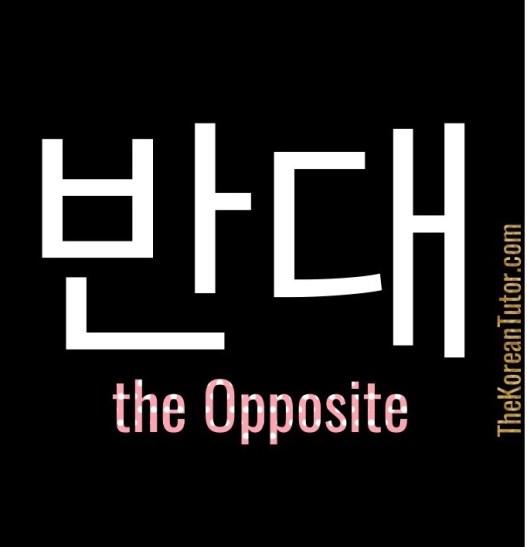
만장일치 (consensus) refers to a situation when all people gathered in a place are of the same opinion.  When everybody agrees with an item, we say “만장일치 찬성 (a unanimous agreement)”, on the other hand, when everybody disagrees with an item, we say “만장일치 반대 (a unanimous disagreement)”. This word is often found in political systems or frameworks.

헤이즈 vs. 이효리 그리고 효리네 민박! 캭~~!

여러분, 요즘 헤이즈(Heize) 노래가 핫하죠? ^^ 헤이즈 노래도 너무 좋지만, 전 ‘응답하라 1994년’의 배경처럼 그 시대의 우상, 핑클과 젝키한테 좀 더 정이 가네요~  ㅋ 그중에서도 전 이효리(Hyori Lee)를 너무나 좋아했죠! 요즘 이효리의 자연스러운 삶이 더욱 더 빛이 나는것 같아요! 남편 김상순과 알콩달콩 살아가는 효리네 민박에서의 모습이 너무나 귀엽고 사랑스럽네요! 이효리는 그녀의 10대-20대 때 최고의 주가를 올렸던 스타였죠. 그녀의 30대는 진심으로 삶을 피부로 느끼고 살아가는 듯 보이네요~ 이효리씨, 멀리서나마 응원합니다. 제가 좋아하는 헤이즈 노래와 이효리가 이번에 오랜만에 컴백해서 들고나온 노래를 띄웁니다. 그리고 효리네 민박 하이라이트 중 제게 인상적이였던 영상도 추가로 올립니다. ^^

Classes start Sept 5th! Sign up today.

Learn Korean!- in the fastest, easiest and most fun way.

Since 2005, I have helped students improve their confidence in Korean language. I have developed the best learning contents for you! You can be fluent in Korean and I will do my best efforts to guide you through the process.

#1 “THE KOREAN TUTOR” LANGUAGE PROGRAM  +
#2 MICRO CLASSES  =
#3 YOUR LANGUAGE ACQUISITION
FALL SEMESTER 2017

Sept 5 – Oct 16

Semester Information

  • Semester Begins: Sept 5, 2017.
  • Semester Ends: Oct 16, 2017.

How to Enroll?  Simply fill out enrollment form.

  1. Choose the level and the class time that fits your schedule.
  2. Press “Submit”.
  3. You will receive your enrollment confirmation via email.
  4. See you in class!

Attendance, Class size, Make-up class

  • Classes are held 50 minutes per week for 6 consecutive weeks.
  • Small, personalized group classes. (Max. of 10 students per class)
  • In case of absence, you may attend one make-up class per semester.

Course Material

  • Textbook  +
  • Homework Assignment  +
  • Weekly Quiz / Test  +
  • Homework Grade & Feedback (Submitted homework will be graded with feedback & returned via email)  +
  • Student Learning Resources  =  All included with Tuition

Course Method

  • Online Class
  • Weekly Live Lecture
  • Skype / Hangouts
  • Online Whiteboard

Semester Tuition

  • Tuition is due: Sept 1, 2017.
  • Method: Venmo
SCHEDULE OF CLASSES

Beginner Level 1

Session Begins Sept 5, 2017. Click Here to View Schedule of Classes!

**The Beginner level 1 class meets once a week. This course introduces the foundation of the Korean language. Emphasis is on skill building of the Hangul reading, writing, listening and pronunciation. Upon completion, students are able to have a very basic knowledge of the language & understand familiar everyday expressions and very basic phrases. Students are also able to introduce oneself and others & ask/answer questions about personal details.

Beginner Level 2

Session Begins Sept 5, 2017. Click Here to View Schedule of Classes!

**The Beginner level 2 class meets once a week. This course provides the Hangul review and expansion of the essential skills. Reading, speaking and writing a simple sentence skills are greatly emphasized. Upon completion, students are able to interact in a simple way and able to understand sentences, frequently used expressions related to areas of most immediate relevance.

Beginner Level 5

Session Begins Sept 11, 2017. Click Here to View Schedule of Classes!

**The Beginner level 5 class meets once a week.  This course provides speaking, writing (paragraphs) exercises and class discussions.  Emphasis is placed on developing the ability to communicate with modern expressions and vocabulary. Upon completion, students are able to understand the main points of clear standard input on familiar matters regularly encountered in work, school, leisure, etc. Students are also able to deal with most situations likely to arise while traveling Korea.
I BELIEVE IN A HUMAN CONNECTION.
It’s a fact — live human interaction and conversation lead to faster learning.

More questions? Contact me today.

Korean Conversation: 조금만 조용히 해 주시겠어요? (Could you be quiet a little bit?)

조금만 조용히 해 주시겠어요? (Could you be quiet a little bit?) : We use the expression ‘조금만 –아/어 주시겠어요?’ when we ask someone politely such as in ‘조금만 조용히 해(quiet) 주시겠어요?’.

Screen Shot 2017-06-18 at 11.03.45 AM.png

일상회화 (Korean Conversation)

We use the expression ‘조금만 –아/어 주시겠어요?’ when we ask someone politely such as in  ‘조금만 조용히 해 (quiet) 주시겠어요?’,  ‘조금만 비켜 (step aside) 주시겠어요?’ and  ‘조금만 옆으로 가 (move over) 주시겠어요?’.  This expression is used when we disturb someone or when we are in the situation that we have to ask to be excused.

Korean New Coinage: 스펙 (Spec)

Screen Shot 2017-02-19 at 11.55.17 AM.png

신조어 (New Coinage)

스펙 : The proof of various abilities which job seekers have

‘스펙’ is from the English word ‘spec’ which is the contraction of ‘specification’, and it means the characteristic, function or performance of a certain product.  By the way, we began to use the word ‘스펙’ as the meaning of ‘취업을 위해 갖추고 있는 능력 (ability which is needed for finding a job), by comparing the job seekers to the products as if they are the products sold to the company.  We often say ‘스펙이 좋다/나쁘다 (spec is good/bad)’or ‘스펙을 쌓다 (build a spec)’, and we use it for anything needed for finding a job such as in ‘스펙 관리 (spec management)’, ‘외모 스펙 (appearance spec)’ and ‘합격 스펙 (pass spec)’.

Lately, the word ‘스펙’ earned a negative meaning as people use ‘스펙’ for almost everything which would help with finding a job such as school ties, regionalism, blood ties and even appearance which does not have anything to do with ability or skill.

Korean Idiom: 애를 먹다 (have considerable difficulties and feel extremely tired

애를 먹다 (have a hard time (literally, ‘eat Ae’)) : have considerable difficulties and feel extremely tired.

Screen Shot 2017-01-08 at 11.01.54 AM.png

관용표현 (Korean Idiom)

From an old Korean saying, “애 (Ae)” literally means the “intestine”. Now, the word has come to mean “근심에 싸여 초조한 마음속 (one’s nervous mind that is filled with worries)” and “마음과 몸의 몹시 수고로움 (extremely tired mind and body)”.  “애를 먹다 (to eat Ae)” means “to have considerable difficulties”, or simply put, “to do backbreaking work”.  Because this expression is used when we arduously completed something uneasy, we need to clarify the reasons of eating Ae by using the following sentence structure: “-때문에 애를 먹다 (to eat Ae, because of something)”, “-느라 애를 먹다 (to eat Ae when doing something)”. However, these expressions with Ae are not used with the elderly.

Korean Conversation: 엊그제 같은데 (It is just like yesterday)

엊그제 같은데 (It is just like yesterday) : This expression means that something which happened long time ago seems as if it just happened yesterday or the day before yesterday.

Screen Shot 2016-12-08 at 11.02.01 AM.png

일상회화 (Korean Conversation)

When we feel like time flies, we use the expression “엊그제 같은데 (it seems like yesterday or the day before yesterday)”.  It means something that happened so long ago but it seems to you that it just happened yesterday or the day before yesterday.  It has a nuance that you feel little bit sad or surprised for the days going so quickly without noticing it.

푸른 바다의 전설 OST “Love Story”

Screen Shot 2016-12-07 at 1.30.14 PM.png

The Legend of the Blue Sea (푸른 바다의 전설) 

조선 시대의 야담집인 “어우야담”에 나오는 인어 이야기를 모티브로 한 귀여운 드라마다! OST 또한 사랑스러운 린의 목소리가 너무나 잘 어울린다. 내일 8회가 너무나도 기다려 진다. 우리 학생들은 이번주부터 1회 시작이죠? 재미있게 보고, 드라마 리포트 기대 할께요~

Korean Conversation: 문자 온 줄 몰랐어 (I didn’t notice that I got a text message)

문자 온 줄 몰랐어 (I didn’t notice that I got a text message) : This expression has the meaning that “이제서야 알았다 (I just noticed late)” rather than “몰랐다 (did not know).”

Screen Shot 2016-11-29 at 7.43.30 AM.png

일상회화 (Korean Conversation)

Just after realizing that you got a message, you can say “문자 온 줄 몰랐어 (I didn’t notice that I got a text message)”. As such, you can say “전화 온 줄 몰랐어 (I didn’t know I got a call)” and “메일 보낸 줄 몰랐어 (I didn’t know you sent me an email)” after noticing that you got an email or a call.  This expression emphasizes the meaning, “이제서야 알았다 (I just noticed late) rather than “몰랐다 (did not know)”.

Create a website or blog at WordPress.com

Up ↑