Search

the Korean Tutor

Professional Korean Language Tutor | Korean Language Classes for Children & Adults | Korean Dialect Coach | Korean Script Translator | LOS ANGELES | NEW YORK | CHICAGO | HOUSTON | PHOENIX | PHILADELPHIA | SAN ANTONIO | SAN DIEGO | DALLAS | AUSTIN | SAN JOSE | SAN FRANCISCO | SEATTLE | WASHINGTON, D.C. | BOSTON | TORONTO | MONTREAL | VANCOUVER | SEOUL | TheKoreanTutor.com

Tag

Korean

Learn Korean โ€“ Upper Beginner Level, Unit 3.1: Directly Modifying with Descriptive Verbs

Learn Korean โ€“ Upper Beginner Level, Unit 3.1: Directly Modifying with Descriptive Verbs

Download a free PDF lesson for this episode here: UNIT 3.1

screen shot 2019-01-13 at 4.09.54 pm

Directly Modifying with แ„‡ Irregular Descriptive Verbs

แ„‡ irregular are converted a bit differently than other descriptive verbs. Instead of converting แ„‡ into ์›Œ, itโ€™s converted into ์šด to make the direct modifier.

์ถฅ๋‹ค (to be cold [weather]), ์ฐจ๊ฐ‘๋‹ค (to be cold [touch])

CONJUGATION:
์ถฅ๋‹ค – ์ถ” – ์ถ”์šด (a cold [weather])
์ฐจ๊ฐ‘๋‹ค – ์ฐจ๊ฐ€ – ์ฐจ๊ฐ€์šด (a cold [touch])

Example sentences

๋งŽ์€ ์‚ฌ๋žŒ๋“ค์€ ์ถ”์šด ๋‚ ์”จ๋ฅผ ์ข‹์•„ํ•˜์ง€ ์•Š์•„์š”. Many people donโ€™t like cold weather.


Directly Modifying with Descriptive Verbs – Special Case I

Anytime the stem of a descriptive verb ends with a แ„… final consonant, the แ„… is just changed to a แ„‚.

๋‹ฌ๋‹ค (to be sweet), ๊ธธ๋‹ค (to be long)

CONJUGATION:
๋‹ฌ๋‹ค – ๋‹ฌ – ๋‹จ (a sweet)
๊ธธ๋‹ค – ๊ธธ – ๊ธด (a long)

Example sentences

์ €๋Š” ์ดˆ์ฝœ๋ฆฟ, ๊ณผ์ž ๋“ฑ ๋‹จ ๊ฒƒ์„ ์ข‹์•„ํ•ด์š”. I like sweets like chocolate, cookies, and so on.


Directly Modifying with Descriptive Verbs – Special Case II

Another special case is when the descriptive verb ends with ์žˆ๋‹ค or ์—†๋‹ค. With these types you can simply add ๋Š” to the stem.

๋ง›์žˆ๋‹ค (to be tasty), ๋ง›์—†๋‹ค (to be tasteless)

CONJUGATION:
๋ง›์žˆ๋‹ค – ๋ง›์žˆ – ๋ง›์žˆ๋Š” (tasty)
๋ง›์—†๋‹ค – ๋ง›์—† – ๋ง›์—†๋Š” (tasteless)

Example sentences

์ €๋Š” ๊ฐ€์กฑ๊ณผ ํ•จ๊ป˜ ๋ง›์žˆ๋Š” ์Œ์‹์„ ๋งŽ์ด ๋จน์—ˆ์–ด์š”. I ate a lot of delicious food with my family.

์ €๋Š” ๋ง›์—†๋Š” ๊ฒƒ๋ถ€ํ„ฐ ๋จน์–ด์š”. I eat the bad-tasting ones first.

Learn Korean – Upper Beginner Level, Unit 3: Directly Modifying with Descriptive Verbs

Learn Korean – Upper Beginner Level, Unit 3: Directly Modifying with Descriptive Verbs

Download a free PDF lesson for this episode here:ย Unit 3

Screen Shot 2018-10-30 at 1.59.36 PM.png

When the last syllable of theย stem endsย in aย vowel: add ใ„ด

์‹ธ๋‹ค (to be cheap): ์‹ธ๋‹ค – ์‹ธ – ์‹ผ (a cheap)
๋น ๋ฅด๋‹ค (to be fast): ๋น ๋ฅด๋‹ค – ๋น ๋ฅด – ๋น ๋ฅธ (a fast)

Since ํ•˜๋‹ค stem endsย in aย vowel: add ใ„ด

์กฐ์šฉํ•˜๋‹ค (to be quiet): ์กฐ์šฉํ•˜๋‹ค – ์กฐ์šฉํ•˜ – ์กฐ์šฉํ•œ (a quiet)
์ฐฉํ•˜๋‹ค (to be kind): ์ฐฉํ•˜๋‹ค – ์ฐฉํ•˜ – ์ฐฉํ•œ (a kind)

When the last syllable of theย stem endsย in aย consonant: add ์€

๋งŽ๋‹ค (to be many): ๋งŽ๋‹ค – ๋งŽ – ๋งŽ์€ (many)
์ž‘๋‹ค (to be small): ์ž‘๋‹ค – ์ž‘ – ์ž‘์€ (a small)

Upper Beginner Level, Unit 2: Action Verbs Usage (๋™์‚ฌ ์‚ฌ์šฉ๋ฒ•)

Learn Korean – Upper Beginner Level, Unit 2: Action Verbs Usage (๋™์‚ฌ ์‚ฌ์šฉ๋ฒ•)

Download a free PDF lesson for this episode here:ย Unit 2

Screen Shot 2018-06-09 at 10.01.45 AM

ํ•˜๋‹ค (to do): The thing you are doing is marked with the object particle ์„/๋ฅผ.

์ข‹์•„ํ•˜๋‹ค (to like), ์‹ซ์–ดํ•˜๋‹ค (to dislike): The person, thing, place that you like or dislike is marked with the object particle ์„/๋ฅผ.

๊ณต๋ถ€ํ•˜๋‹ค (to study): The thing being studied is marked with ์„/๋ฅผ object particle. The place where you study is marked with the event/activity location particle ์—์„œ.

Upper Beginner Level, Unit 1.1: Adjective Usage (ํ˜•์šฉ์‚ฌ ์‚ฌ์šฉ๋ฒ•)

Learn Korean – Upper Beginner Level, Unit 1.1: Adjective Usage (ํ˜•์šฉ์‚ฌ ์‚ฌ์šฉ๋ฒ•)

Download a free PDF lesson for this episode here:ย Unit 1.1

Screen Shot 2018-06-05 at 1.37.15 PM.png

๋‹ค๋ฅด๋‹ค (To be different), ๊ฐ™๋‹ค (To be the same): ๋‹ค๋ฅด๋‹ค and ๊ฐ™๋‹ค are used to compare one or more items. The item being compared is marked with any of the three โ€œANDโ€ conjunctive words such as ์™€/๊ณผ, ํ•˜๊ณ , ๋ž‘/์ด๋ž‘.

ํ•„์š”ํ•˜๋‹ค (To need), ํ•„์š”์—†๋‹ค (To not need): The thing that is needed or not needed is marked with a topic or subject particle.

๋‚˜์˜๋‹ค (To be bad): The item, place, or person that is bad is marked with a topic or subject particle.

Upper Beginner Level, Unit 1: Adjective Usage (ํ˜•์šฉ์‚ฌ ์‚ฌ์šฉ๋ฒ•)

Learn Korean – Upper Beginner Level, Unit 1: Adjective Usage (ํ˜•์šฉ์‚ฌ ์‚ฌ์šฉ๋ฒ•)

Download a free PDF lesson for this episode here:ย UNIT 1

Screen Shot 2018-05-26 at 10.07.20 AM

์‹œ๋„๋Ÿฝ๋‹ค (To be loud): ์‹œ๋„๋Ÿฝ๋‹ค is a แ„‡ irregular verb. The item, place, or person that is loud is marked with a topic or subject particle.

์กฐ์šฉํ•˜๋‹ค (To be quiet): ์กฐ์šฉํ•˜๋‹ค is a ํ•˜๋‹ค verb. The item, place, or person that is quiet is marked with a topic or subject particle.

๊ธธ๋‹ค (To be long), ์งง๋‹ค (To be short) The item that is long or short is marked with the subject particle ์ด/๊ฐ€ or topic particle ์€/๋Š”. ์งง๋‹ค ends with a แ„‡ but it is not แ„‡ irregular verb. ์งง๋‹ค is not for height.

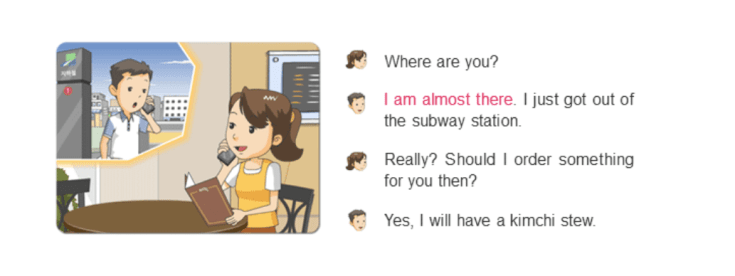
Korean Everyday Conversation: ๋‹ค ์™€ ๊ฐ€ (I am almost there)

Screen Shot 2018-04-26 at 8.55.38 AMScreen Shot 2018-04-26 at 8.56.16 AM

Korean Everyday Conversation (์ผ์ƒํšŒํ™”)

๋‹ค ์™€ ๊ฐ€ (I am almost there)

๋‹ค ์™€ ๊ฐ€ is used when we say that we almost arrived at the appointed place to the person who we are supposed to meet.ย  We normally use ๊ฐ€๋‹ค when we are moving towards the target place instead of ์˜ค๋‹ค which is used when someone is moving towards the speaker.ย  For example, if we are at school, we say ํ•™๊ต์— ์™€ (come to school) or ์ง‘์— ๊ฐ€ (go home) to the listener.ย  On the contrary, if we are home, we say ํ•™๊ต์— ๊ฐ€ (go to school) or ์ง‘์— ์™€ (come home).ย  However, you have to pay attention to the fact that we sayย ๋‹ค ์™€ ๊ฐ€ by using ์˜ค๋‹คย  even though the speaker is moving towards the listener.


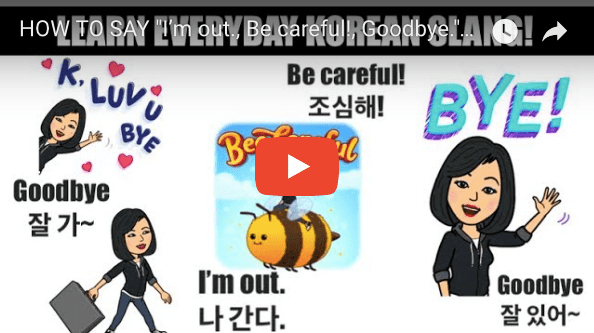
[Everyday Korean SLANG!] HOW TO SAY “Iโ€™m out., Be careful!, Goodbye.” IN KOREAN LANGUAGE.

[Everyday Korean SLANG!]
HOW TO SAY “Iโ€™m out., Be careful!, Goodbye.” IN KOREAN LANGUAGE

Screen Shot 2018-01-23 at 9.26.22 AM.png

[Everyday Korean SLANG!] HOW TO SAY “Itโ€™s been a while., Youโ€™re still alive?, See ya!, Later!” IN KOREAN LANGUAGE.

[Everyday Korean SLANG!]
HOW TO SAY “Itโ€™s been a while., Youโ€™re still alive?, See ya!, Later!” IN KOREAN LANGUAGE.

Screen Shot 2018-01-22 at 11.25.46 AM.png

[Everyday Korean SLANG!] HOW TO SAY “How ya been?, Good!, So-so., Sucky.” IN KOREAN LANGUAGE.

[Everyday Korean SLANG!]
HOW TO SAY “How ya been?, Good!, So-so., Sucky.” IN KOREAN LANGUAGE.

Screen Shot 2018-01-20 at 10.33.23 AM.png

Create a website or blog at WordPress.com

Up ↑