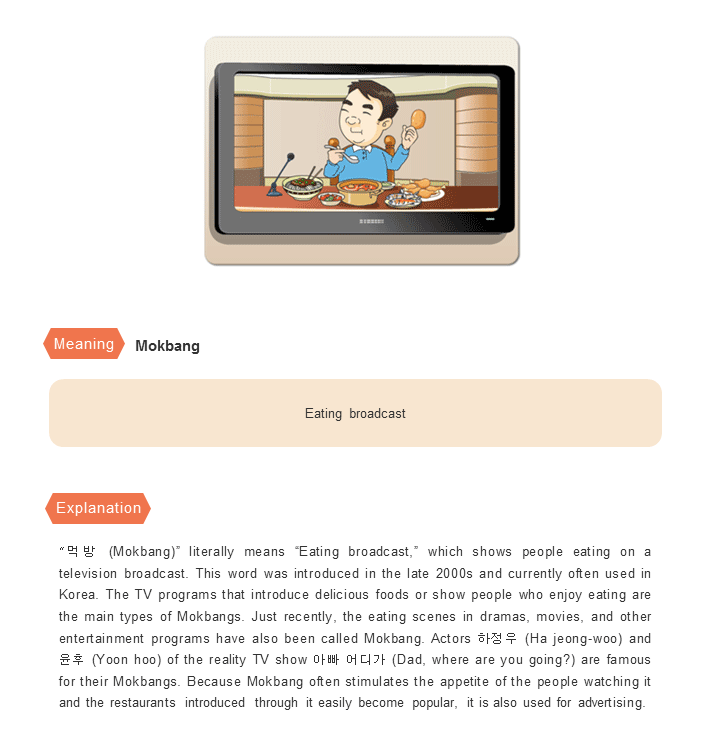
먹방 : Eating show

먹방 : Eating show

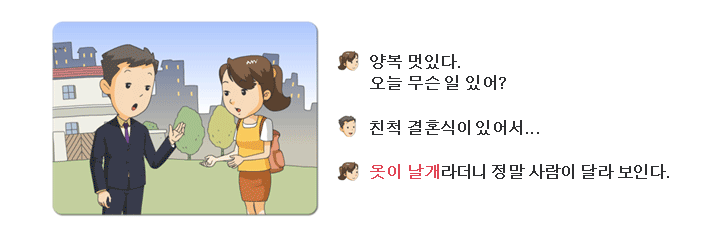
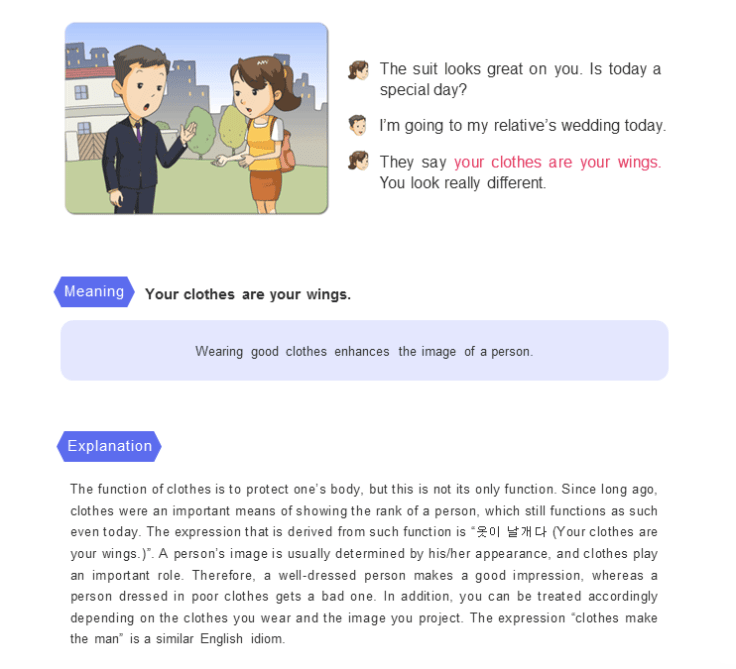
옷이 날개다 (find feathers make fine birds (literally, your clothes are your wings)) : Wearing good clothes enhances the image of a person.


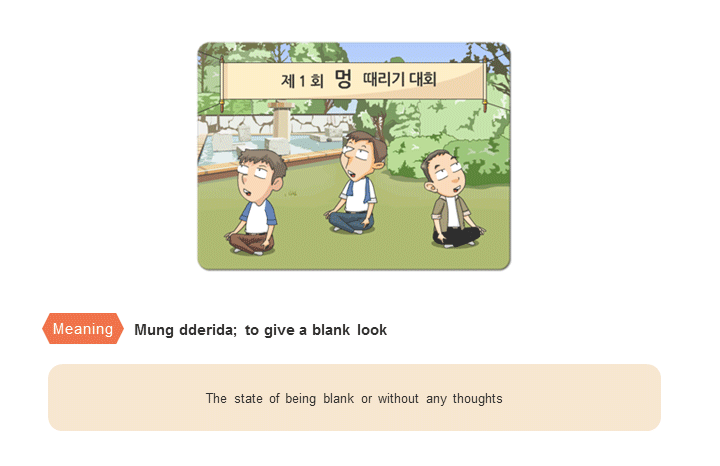
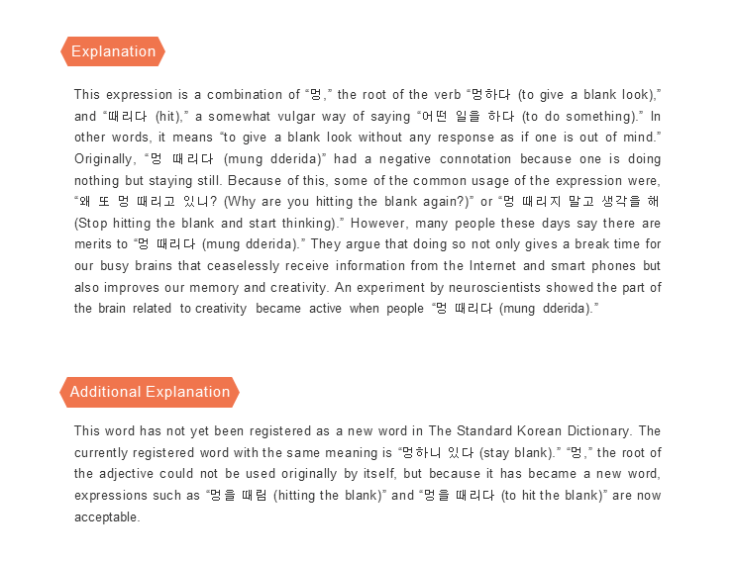
멍 때리다 (Mung dderida ; give a blank look) : The state of being blank without any thoughts


이제 곧… “질투의 화신”과도 이별을… ㅎㅎ 그동안 달달했습니다! 마지막 남은 몇 회들을 기대하며… 라디의 노래 즐감 하세요~ 몇시간 남은 일요일, 편안하게 쉬시고요! 언제나 해피 배움 되셈~ (Happy Learning as always~)
도둑이 제 발 저리다 (A guilty conscience needs no accuser (literally, a thief’s legs go numb)) : The state in which someone is automatically feeling uncomfortable if he/she has done something wrong


텔레비전 좀 틀어 봐 (Turn on the television) : When we want someone to activate his/her electronic device like radio or television, we say “무엇 좀 틀어 봐(turn on something).”


With so many languages to choose from, you may be wondering why your child should learn Korean. Here are a few reasons why Korean may be the right choice for your little one.
1. The Korean language is growing in popularity.
Korean is the sixteenth most widely spoken language in the world, spoken by more than 78 million people, according to Boston University.
As South Korea has become a bigger player in the world economy thanks to its technological innovation and popular culture, Korean language learning has been on the rise, particularly among younger people. Young adults are recognizing the growing opportunities in Korea and adopting the language to give themselves a leg up over the competition.
2. The alphabet is easy to learn.
The Korean alphabet, Hangul, is a phonetic alphabet with 24 letters and is very easy to read and write.
It is written from left to right and it has a unique way of organizing its letters into syllables where consonants and vowels are neatly arranged in blocks.
3. Korean phonetics are easy for English speakers.
Korean phonetics come easily to English speakers. Korean is usually pronounced exactly the way it’s written.
4. Many Korean words are made up smaller, single syllable words.
Many compound Korean words are made up of single syllable words and you can usually take a rough guess at its meaning if you can recognize them.
5. Help understand family background better. (For 3rd, 4th, 5th generation Koreans)
Learning Korean will help your child to understand their past. Maybe your ancestors lived in Korea. Maybe you have family or friends of Korean heritage. Learning about Korean language and culture will give your child a deep appreciation for his/her ancestors as well as for this ancient culture.
6. Learning Korean can be fun and easy.
My Korean tutoring for kids makes it fun and easy for kids to learn. (Ages 3 up to 18) Learning Korean can be a great way to give your child a head start and prepare him or her for the global economy. Contact me Today!

“My 8-year old daughter began private Korean language lessons with Suebeet almost 3 months ago (two 90-minute lessons per month) and she really loves her lessons. Suebeet is very personable and keeps my daughter highly engaged throughout the 90-minute lessons. More importantly, my daughter is learning quickly and efficiently – she has already learned the Korean alphabet and a number of vocabulary words and is eager to learn more with each lesson. I highly recommend Suebeet if you have school-age children who are seeking to learn to read, speak and write Korean!” – Juliet O.
“Suebeet has been a great Korean teacher for my 3 year old son! He is very shy and timid but he quickly adjusted to her and the classes. I feel like he improves every week with new words and new phrases. She makes the class fun for my son and is very patient with him as well. He looks forward to his Korean classes. I highly recommend Suebeet for anyone at any age who wants to learn Korean for the first time or you’re just trying to improve your Korean!” – Minnie C.
Click here to view many more reviews.

– 빼고 : “무엇 빼고(except for)” is used when we are fine with anything except for something.


얼마나 기다려야 돼요? (How long do I have to wait?) : When we want to ask how much time it takes until we get our turn, we may say “얼마나 기다려야 돼요? (How long do I have to wait?).”