Search

the Korean Tutor

Professional Korean Language Tutor | Korean Language Classes for Children & Adults | Korean Dialect Coach | Korean Script Translator | LOS ANGELES | NEW YORK | CHICAGO | HOUSTON | PHOENIX | PHILADELPHIA | SAN ANTONIO | SAN DIEGO | DALLAS | AUSTIN | SAN JOSE | SAN FRANCISCO | SEATTLE | WASHINGTON, D.C. | BOSTON | TORONTO | MONTREAL | VANCOUVER | SEOUL | TheKoreanTutor.com

Category

Korean Language Advanced Level

Korean Idiom: 애를 먹다 (have considerable difficulties and feel extremely tired

애를 먹다 (have a hard time (literally, ‘eat Ae’)) : have considerable difficulties and feel extremely tired.

Screen Shot 2017-01-08 at 11.01.54 AM.png

관용표현 (Korean Idiom)

From an old Korean saying, “애 (Ae)” literally means the “intestine”. Now, the word has come to mean “근심에 싸여 초조한 마음속 (one’s nervous mind that is filled with worries)” and “마음과 몸의 몹시 수고로움 (extremely tired mind and body)”.  “애를 먹다 (to eat Ae)” means “to have considerable difficulties”, or simply put, “to do backbreaking work”.  Because this expression is used when we arduously completed something uneasy, we need to clarify the reasons of eating Ae by using the following sentence structure: “-때문에 애를 먹다 (to eat Ae, because of something)”, “-느라 애를 먹다 (to eat Ae when doing something)”. However, these expressions with Ae are not used with the elderly.
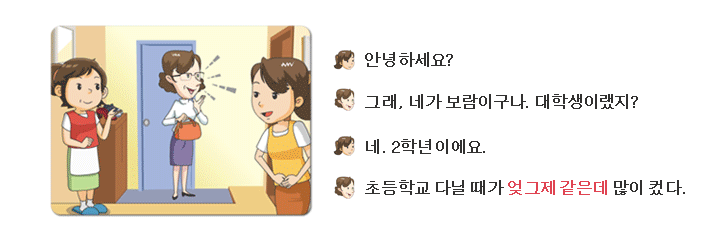

Korean Conversation: 엊그제 같은데 (It is just like yesterday)

엊그제 같은데 (It is just like yesterday) : This expression means that something which happened long time ago seems as if it just happened yesterday or the day before yesterday.

Screen Shot 2016-12-08 at 11.02.01 AM.png

일상회화 (Korean Conversation)

When we feel like time flies, we use the expression “엊그제 같은데 (it seems like yesterday or the day before yesterday)”.  It means something that happened so long ago but it seems to you that it just happened yesterday or the day before yesterday.  It has a nuance that you feel little bit sad or surprised for the days going so quickly without noticing it.

푸른 바다의 전설 OST “Love Story”

Screen Shot 2016-12-07 at 1.30.14 PM.png

The Legend of the Blue Sea (푸른 바다의 전설) 

조선 시대의 야담집인 “어우야담”에 나오는 인어 이야기를 모티브로 한 귀여운 드라마다! OST 또한 사랑스러운 린의 목소리가 너무나 잘 어울린다. 내일 8회가 너무나도 기다려 진다. 우리 학생들은 이번주부터 1회 시작이죠? 재미있게 보고, 드라마 리포트 기대 할께요~

Korean Conversation: 문자 온 줄 몰랐어 (I didn’t notice that I got a text message)

문자 온 줄 몰랐어 (I didn’t notice that I got a text message) : This expression has the meaning that “이제서야 알았다 (I just noticed late)” rather than “몰랐다 (did not know).”

Screen Shot 2016-11-29 at 7.43.30 AM.png

일상회화 (Korean Conversation)

Just after realizing that you got a message, you can say “문자 온 줄 몰랐어 (I didn’t notice that I got a text message)”. As such, you can say “전화 온 줄 몰랐어 (I didn’t know I got a call)” and “메일 보낸 줄 몰랐어 (I didn’t know you sent me an email)” after noticing that you got an email or a call.  This expression emphasizes the meaning, “이제서야 알았다 (I just noticed late) rather than “몰랐다 (did not know)”.

Korean New Coinage: 완소 (Completely precious)

Screen Shot 2016-11-18 at 8.04.54 AM.png

신조어 (New Coinage)

완소 (Wanso) : be completely precious

“완소” is an abbreviated form of “완전 소중하다 (완전 [completely] + 소중하다 [to be precious]).  A few years ago, some Koreans started calling their favorite celebrities in TV series or movies as “완소”.  However, just recently, “완소” is widely used not only for persons but also for certain items.  “완전 [complete]” refers to “the condition that something is flawless and as great as it possibly can be”.

“완소” is usually followed by a noun such as “완소 아이템(my precious item)”, “완소남(my precious man)”, “완소녀(my precious lady)”,  etc.

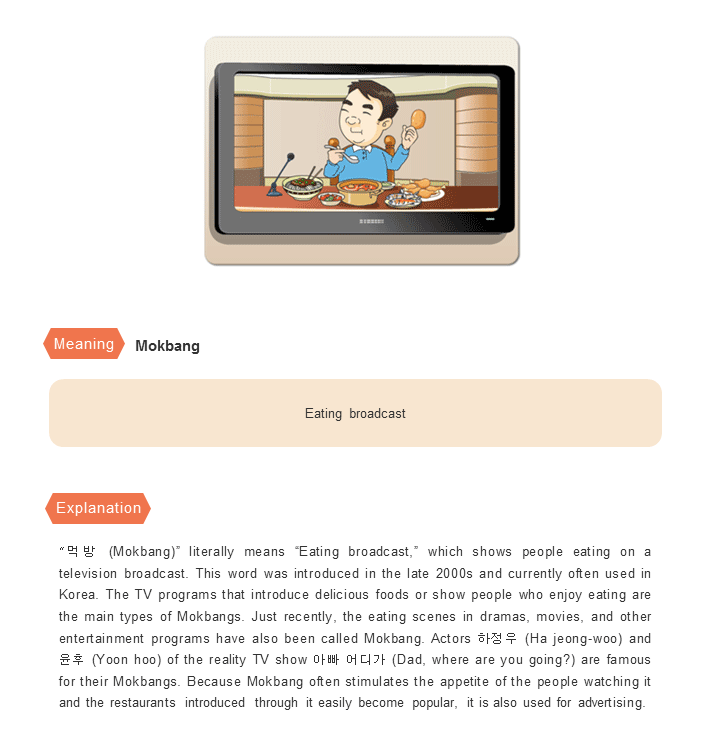
Korean New Coinage: 먹방 (Eating show)

먹방 : Eating show

Screen Shot 2016-11-12 at 8.32.00 AM.png

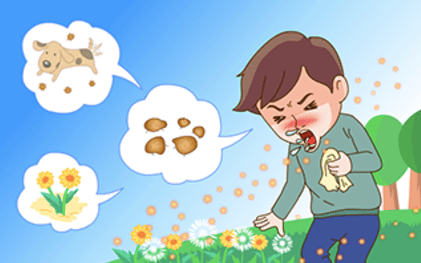
Korean Adv. Vocabulary: 알레르기 (Allergy)

Screen Shot 2016-11-07 at 6.49.56 PM.png

Allergy

독일어로 과민 반응이란 뜻으로 특정한 물질과 접촉하거나 먹었을 때 나타나는 특별한 반응을 말한다. 세균이나 바이러스와 같은 외부 물질을 방어하는 면역 반응으로 인해 나타난다. 보통 먼지 진드기, 꽃가루, 땅콩, 화학 물질 등이 원인이 되며, 재채기, 콧물, 가려움, 숨쉬기 곤란, 두드러기 등 다양한 반응을 보인다. 현대 사회에서 인공 화학 물질이 증가하면서 알레르기가 심해지고 있다.

Allergy, which means hypersensitive reaction in German, refers to special reactions showing up when you touch or eat specific items. It serves as the immune system’s reaction to block external materials such as germs or viruses. Allergy usually comes from dust mites, pollen, peanuts, and chemical products, and displays a variety of reactions such as sneezing, nasal mucus, itching, trouble in breathing, and hives. As artificial chemical products continue to grow in number in this modern society, cases of allergy become worse.

○ 예문

– 그는 심한 알레르기 체질이어서 봄만 되면 꽃가루나 먼지 때문에 괴로워한다.
– 복숭아를 먹고 난 후부터 온몸이 가려운 걸 보니 복숭아 알레르기인 것 같다.

○  Examples

 – As he has a severe allergic constitution, he suffers allergic reactions from pollen or dust in spring.
– Considering that I feel itchy all over after eating peach, I think I am allergic to it.

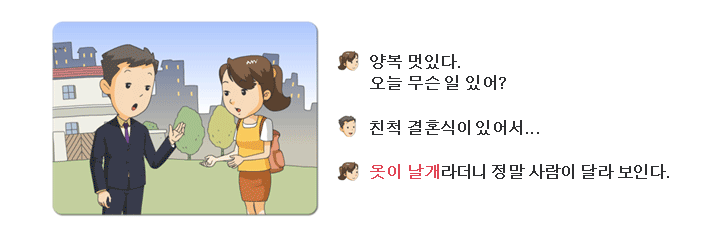
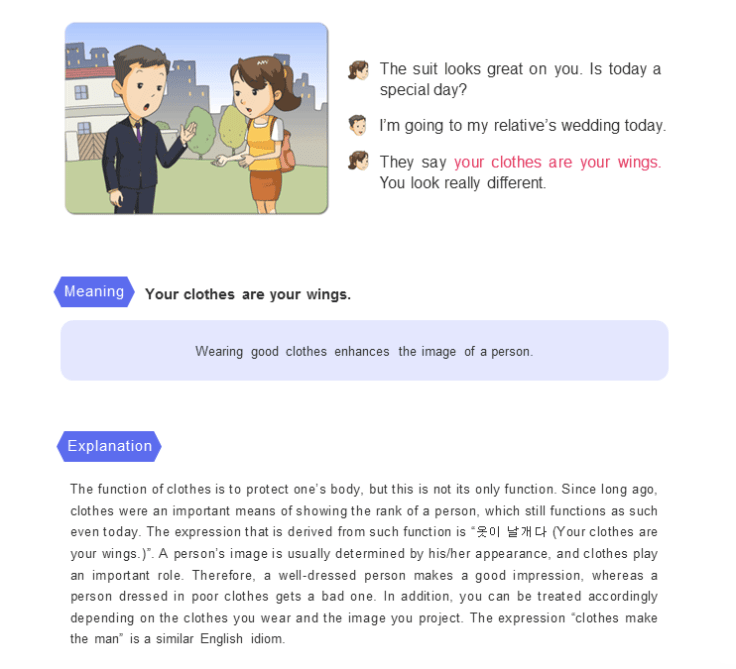
Korean Idiom: 옷이 날개다 (find feathers make fine birds)

옷이 날개다 (find feathers make fine birds (literally, your clothes are your wings)) : Wearing good clothes enhances the image of a person.

screen-shot-2016-11-07-at-6-34-12-pm

screen-shot-2016-11-07-at-6-34-45-pm


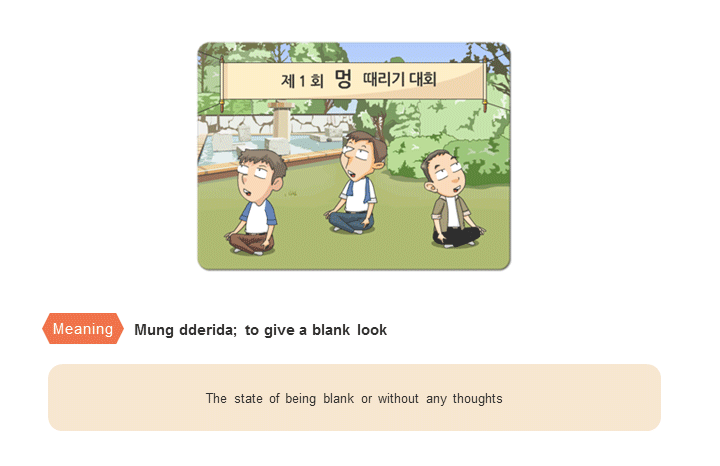
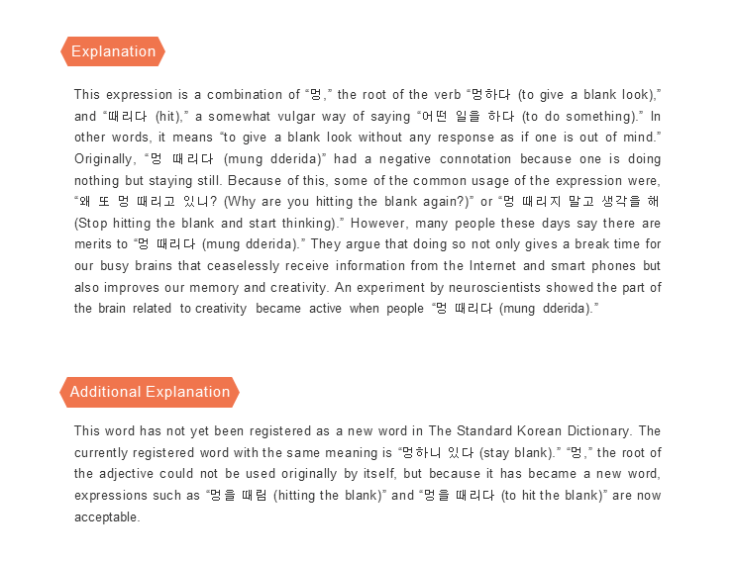
Korean New Coinage: 멍 때리다 (Give a blank look)

멍 때리다 (Mung dderida ; give a blank look) : The state of being blank without any thoughts

screen-shot-2016-11-07-at-6-18-08-pm

screen-shot-2016-11-07-at-6-18-25-pm

Create a website or blog at WordPress.com

Up ↑